


Supporting Student Well-Being Through Prevention, Education, and Community Partnership
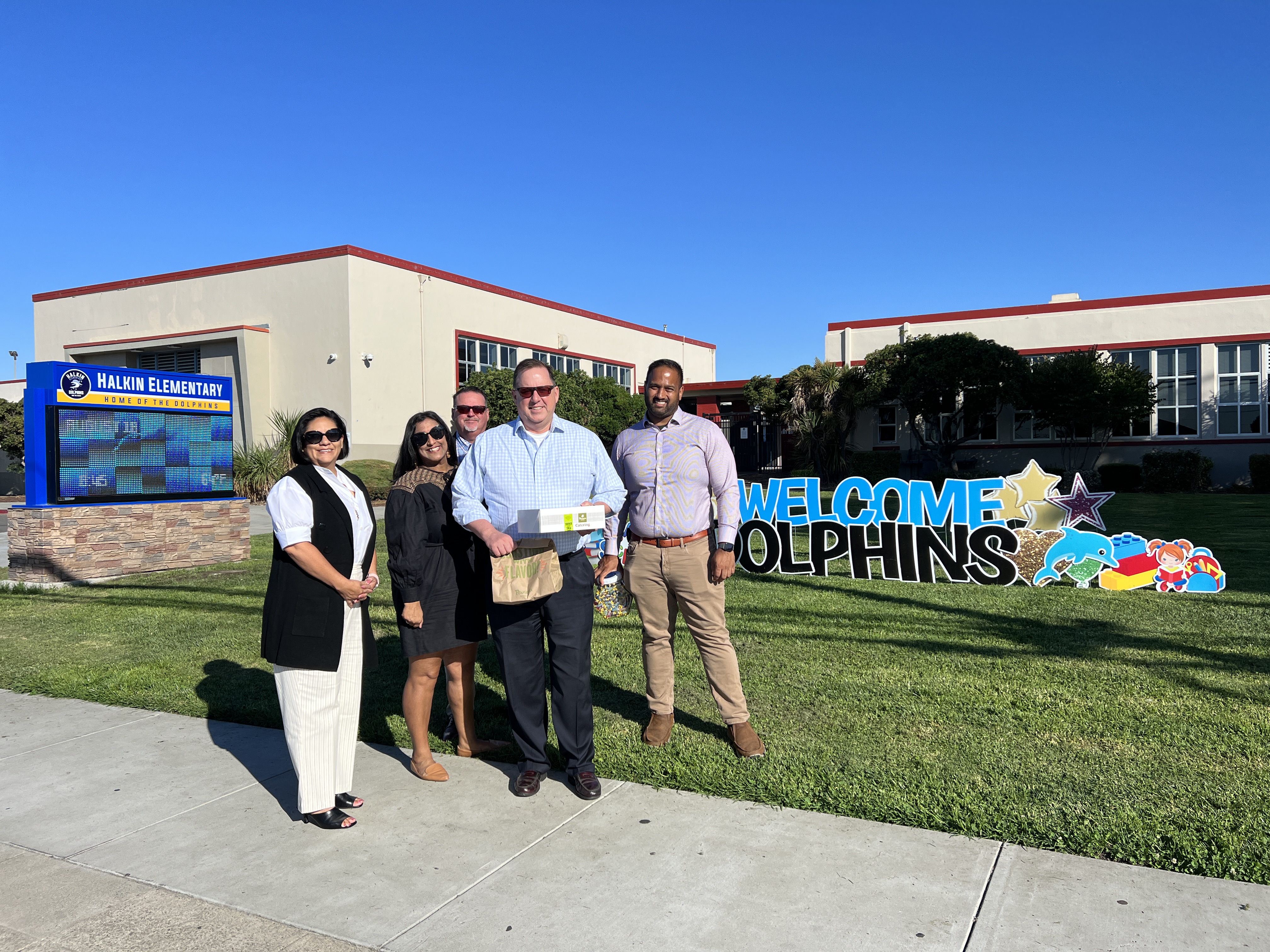
Halkin Elementary School, part of the San Leandro Unified School District in Alameda County, continues to strengthen its efforts to support student safety, belonging, and positive peer relationships. Through Positive Behavioral Interventions and Supports (PBIS), social-emotional learning initiatives, and prevention-focused programming, the school emphasizes proactive approaches that help students develop empathy, responsibility, and confidence.
California’s focus on safe and supportive learning environments recognizes that student wellness, academic engagement, and school climate are closely connected. By providing families and educators with clear information and accessible resources, Halkin Elementary supports shared expectations that extend beyond the classroom and into the broader school community.
This resource page provides guidance on recognizing bullying, understanding the difference between bullying and conflict, and supporting children as they navigate social and emotional challenges during the elementary years.
Understanding Bullying, Conflict, and Student Interaction
Distinguishing between bullying and everyday peer conflict is an essential part of prevention education.
Bullying involves three defining elements:
• The behavior is repeated
• The behavior is intentional
• There is an imbalance of power
Power imbalances may be physical, social, emotional, or related to group dynamics. When all three factors are present, adult intervention and structured support may be required.
Conflict, in contrast, typically occurs between individuals of similar power and often results from misunderstandings or emotional reactions. Teaching students conflict resolution strategies helps build communication skills, self-regulation, and resilience.
Cyberbullying introduces additional challenges because digital communication can extend beyond school hours and reach broader audiences. Encouraging responsible technology use and help-seeking behavior is an important component of modern student wellness education.
Families can explore additional school climate and bullying prevention resources here:
https://www.boxoutbullying.com
PBIS, MTSS, and Positive Behavior Development
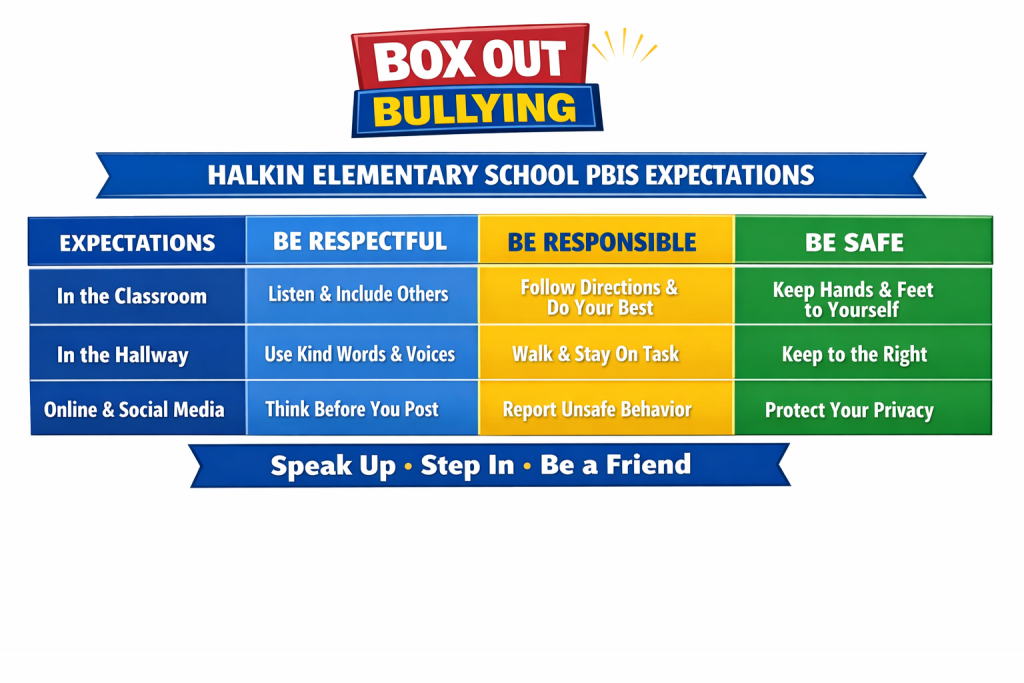
Halkin Elementary uses PBIS as part of a broader Multi-Tiered System of Supports (MTSS) approach that helps ensure students receive the behavioral, social, and emotional support they need to succeed. PBIS promotes consistent expectations across school settings while reinforcing positive student choices.
Integrating bullying prevention education within PBIS and MTSS frameworks helps students understand how everyday actions influence peer relationships and overall school climate. Prevention-focused educational programming can strengthen these skills by providing opportunities for students to practice empathy, inclusion, and problem-solving in structured learning environments.
Learn more about PBIS-aligned prevention education here:
https://www.boxoutbullying.com/anti-bullying-school-assemblies/pbis-program-integration/
Interactive Student Learning and Social-Emotional Development
Engaging learning experiences can help students better understand complex social situations and develop practical strategies for responding to peer challenges.
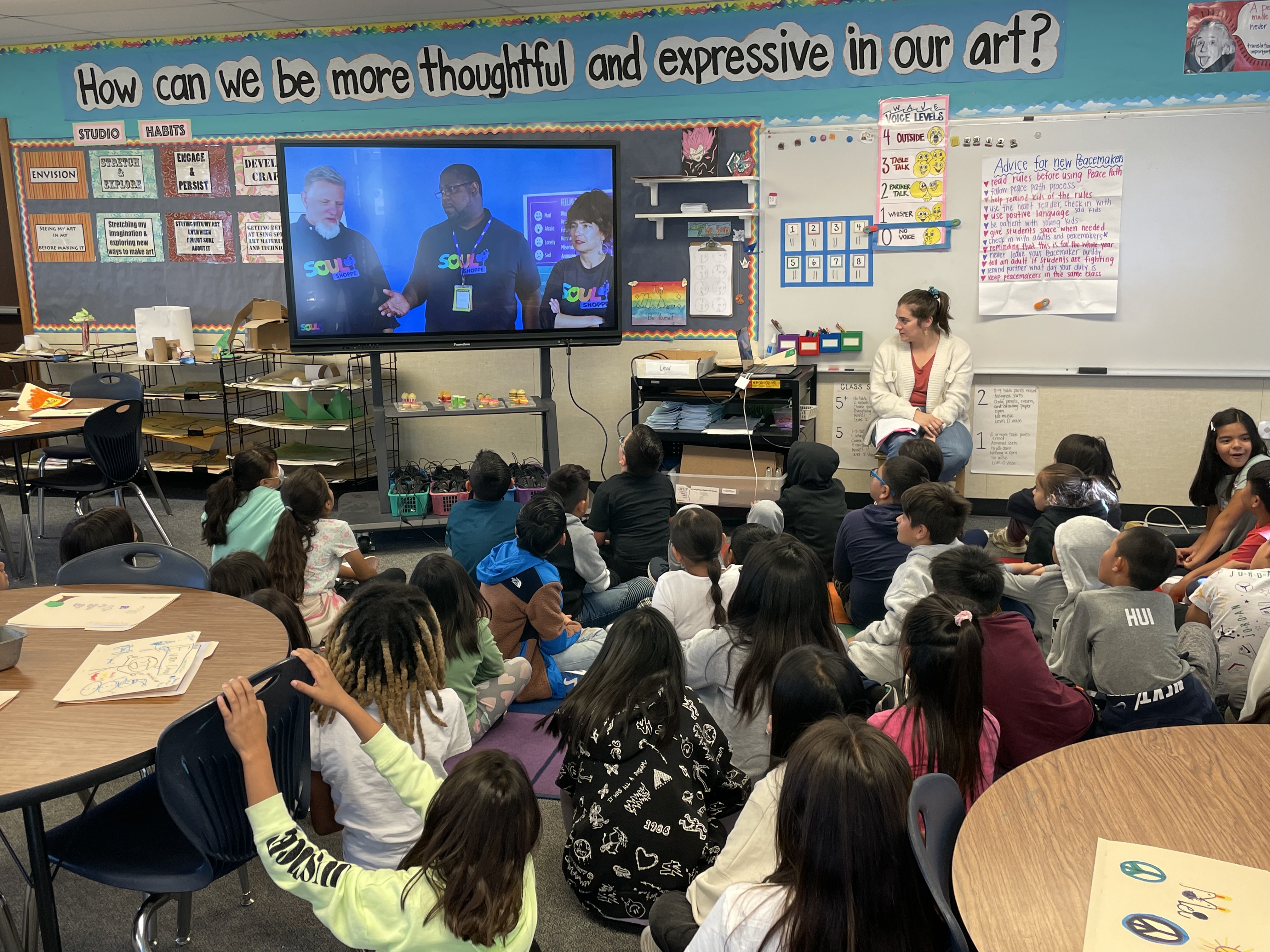
Interactive student assemblies focused on bullying prevention and social-emotional learning allow students to explore real-life scenarios through participation, reflection, and guided discussion. These experiences support California’s emphasis on whole-child development by reinforcing skills such as empathy, self-awareness, and responsible decision-making.
Learn more about student assemblies and prevention programming here:
https://www.boxoutbullying.com/anti-bullying-school-assemblies/
Additional social-emotional learning resources are available here:
https://www.boxoutbullying.com/social-emotional-learning-bullying-prevention-training/
Family Engagement and Parent Education
Family-school collaboration plays a critical role in supporting student well-being and positive peer interaction. Parent workshops provide caregivers with practical strategies for addressing social challenges, reinforcing positive behavior expectations, and supporting children through developmental transitions.
Topics may include recognizing signs of bullying, building resilience, fostering emotional regulation, and promoting responsible digital citizenship. These shared learning opportunities help ensure that prevention messaging remains consistent between home and school.
Learn more about parent education opportunities here:
https://www.boxoutbullying.com/parent-workshops/
Families can also explore ongoing articles and resources here:
https://www.boxoutbullying.com/blog/
Ongoing Resources for Families and Caregivers
Access to continuing education resources can help reinforce prevention efforts throughout the school year. Families are encouraged to explore materials that support communication, relationship-building, and student confidence.
Access family resources here:
https://www.boxoutbullying.com/parent-workshop-resource-page/
